Join us this fall on your remote study of John’s three epistles. (Follow the menu above.)
Apostle John’s Three Letters . . . 1 John 2:12–17
John’s Reasons for Writing
…from BiblePics.co

Click to enlarge and print
this picture of Jesus
with four highlighted qualities.
Before John warns believers about the world around them, he reminds them who they already are in Christ. Their sins have been forgiven, they know the Father, they know Christ, and God’s Word remains in them. Secure in that identity, they can recognize and resist the passing attractions of a world that doesn’t share the Father God’s values.
The central movement of this passage is especially clear: John reassures believers of forgiveness, knowledge of the Father, spiritual strength, and God’s abiding Word, before warning them not to set their love on the passing world.
In today’s passage, John reassures his readers in light of what he’s written so far. The next section (2:18–27) contains a strong warning about opponents who’d departed from the community and sought to mislead believers. Here, however, John speaks tenderly and directly to his readers, reminding them of their secure standing in Christ (detailed in Warren’s summary of 1:1–4).
John has addressed his readers as “my dear children” since 2:1. In the preceding verses, he warned that those who hate a brother or sister remain in darkness. His readers, by contrast, are called to live in the light through love and obedience. Here in 2:12–17, John encourages them by reminding them what God has done for them and then calls them not to love the world.
Verses 12–14 aren’t merely poetic encouragement; they establish the identity from which Christian obedience flows. Their sins have been forgiven because of Christ’s name, they know the Father and the One who’s from the beginning, and God’s Word remains in them. Their best defense was to remember who they were and what God had done for them. John doesn’t call them to earn their place in God’s family. He calls them to live consistently with the grace they’ve already received.
This is a brief but important transition in the letter. John’s themes of love, light, obedience, identity, and discernment belong together. Because believers know the Father and have God’s Word abiding in them, they mustn’t set their hearts on the passing desires and pride of the world. The world is passing away, but the one who does God’s will lives forever.
Why John Wrote This Epistle (1 John 2:12–13)
First John was likely intended to circulate among a network of churches. John writes pastorally to believers facing confusion and spiritual pressure. Throughout the letter, he’s concerned with fellowship with God and assurance of eternal life. Some of his readers may have needed reassurance that their sins were forgiven and that they truly belonged to God.
12I am writing to you, dear children, because your sins have been forgiven on account of his name. 13I am writing to you, fathers, because you know him who is from the beginning. I am writing to you, young men, because you have overcome the evil one (1 John 2:12–13).

Apostle John’s affectionate family language reminds us that the church body makes up God’s family. Believers are brothers and sisters in Christ, and John writes as a spiritual father who loves and cares for them. His words aren’t addressed to detached religious consumers but to members of a redeemed community.
The terms “dear children,” “fathers,” and “young men” may refer to believers at differing stages of spiritual maturity. “Children” emphasizes their place in God’s family and the forgiveness they’ve received through Christ. “Fathers” likely pictures mature believers whose long walk with God has produced a deep knowledge of “him who is from the beginning.” “Young men” may picture believers marked by spiritual strength and victory over the evil one.
At the same time, John’s assurances apply to the whole church. Every true believer has forgiveness through Christ’s name, knows the Father, and is called to stand firmly against the evil one. Whether John is addressing three distinct groups or using overlapping descriptions of the Christian community, his central purpose is clear: He wants his readers to remember who they are and what God has done for them.
The words, “your sins have been forgiven on account of his name,” give the foundation for Christian assurance. Forgiveness isn’t earned by moral achievement, religious service, or spiritual maturity. It’s God’s gift, granted because of Jesus Christ — his person, his saving work, and his authority. We rejoice in forgiveness not because our sin is small, but because God’s grace is great. Read Saint Augustine’s brief opinion of “sin.”
John says that the “fathers” know “him who is from the beginning.” This most naturally refers to Christ, whom John has already identified as existing from the beginning (1 John 1:1–2). Mature believers aren’t defined merely by age or length of church attendance. They’re marked by a settled, growing knowledge of Christ and faithfulness to the apostolic message about him.
The “young men” have overcome “the evil one.” John will explain more fully in v. 14: They are strong because God’s Word remains in them. Their victory doesn’t mean they never face temptation or spiritual conflict. It means they belong to Christ and stand against the devil by remaining in God’s truth and depending on his strength.
Psalm 119 gives a fitting practical expression of this truth: A person stays on the path of purity by living according to God’s Word. Believers of every age need the same protection and power: God’s Word received, treasured, and obeyed.
With Emphasis (1 John 2:14)
John now repeats his earlier encouragement, adding emphasis and one important reason for spiritual strength: The Word of God lives in believers.
14I write to you, dear children, because you know the Father. I write to you, fathers, because you know him who is from the beginning. I write to you, young men, because you are strong, and the Word of God lives in you, and you have overcome the evil one (1 John 2:14).
John repeats the assurances of vv. 12–13, but with added emphasis. His repetition is pastoral, not accidental. He wants his readers to remember who they are in Christ before he warns them not to love the world; later he’ll address those who’d seek to mislead them.

The antidote to spiritual deception isn’t fear but abiding in Christ and in the truth of God’s Word. John reminds his readers that they know the Father, know the One who’s from the beginning, and have already overcome the evil one. Their security rests not in personal strength or superior knowledge, but in their relationship with Christ and in God’s truth remaining in them.
The new emphasis in v. 14 (click image to enlarge) concerns the “young men.” John tells them that they’re strong because “the Word of God lives in you.” Their spiritual strength isn’t natural toughness, maturity, or self-confidence. Instead it comes from God’s Word abiding in their hearts while shaping their lives. Essentially, God’s Word gives believers the truth by which they recognize error, resist temptation, and stand firmly against the evil one.
John’s statement that they “have overcome the evil one” doesn’t mean that spiritual conflict is finished or that believers will never fall into sin. Rather, it means that through Christ they belong to the victorious side. As they remain in God’s Word and depend on him, they needn’t be ruled by the devil’s lies, accusations, or temptations.
Verses 12–14 therefore provide more than encouragement; they prepare believers for the commands and warnings that follow. John wants them to remember what God has done for them: Their sins have been forgiven, they know the Father and the Son, God’s Word remains in them, and they’ve overcome the evil one. From that secure identity, they’re called to resist the world and continue walking in the light.
John used sensory language in the phrase “Word of life” (1:1) to validate the disciples' authority regarding the eternal life Jesus revealed to them. The hope held by the early believers wasn’t built on a myth or gnostic philosophy, but on a historical, physical reality: the One who conquered death was someone they could physically eat and walk with.
Not Loving the World (1 John 2:15–17)
John’s reassurance in vv. 12–14 prepares his readers for this strong command. Because their sins are forgiven, because they know the Father, and because God’s Word remains in them, they’re to live consistently with their identity in Christ. That means refusing to give their deepest love and allegiance to “the world.”

Click to enlarge
On Not Loving the World
15Do not love the world or anything in the world. If anyone loves the world, love for the Father is not in them. 16For everything in the world — the lust of the flesh, the lust of the eyes, and the pride of life — comes not from the Father but from the world. 17The world and its desires pass away, but whoever does the will of God lives forever (1 John 2:15–17).
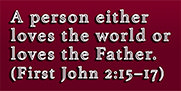
John doesn’t mean that believers must reject the created world, withdraw from people, or refuse every earthly enjoyment. God made the world, and Scripture calls believers to love people. Here, “the world” refers to the fallen system of values, desires, and priorities that’s organized apart from God and opposed to his will.
The apostle presents two incompatible loves: love for the Father and love for the world. This isn’t a call to sinless perfection, nor does it mean that believers never feel worldly desires or face temptation. Rather, it concerns the settled direction of one’s heart. What receives our deepest devotion, determines our loyalties, and governs our choices — God or the world?

Verse 16 explains what belongs to this worldly system. “The lust of the flesh” refers to sinful desires that arise from fallen human nature. “The lust of the eyes” includes sinful craving for what one sees — coveting, envy, and the desire to possess what God hasn’t given. “The pride of life” is boastful self-sufficiency, often expressed through one’s possessions, status, achievements, or perceived security.
Applying this verse practically involves recognizing these temptations in daily modern life and actively choosing a different path: “The lust of the eyes” speaks to the constant temptation to covet, accumulate, or find ultimate worth in what we see and consume. When scrolling through media or shopping, pause to evaluate whether an impulse is driven by a genuine need or a fleeting craving for status or novelty. “The lust of the flesh” targets our baseline physical impulses, comfort, and the urge to gratify every immediate appetite or desire outside of God's boundaries. When faced with an urge for immediate gratification, pause and redirect those energies toward serving someone else or focusing on spiritual priorities. “The pride of life” refers to arrogance, boasting in one's achievements, social standing, possessions, or self-reliance—essentially living as though God is unnecessary. When making decisions, evaluate whether your primary motivation is building your own reputation or honoring God and lifting up those around you.

Not every physical desire, material possession, or human achievement is sinful. The problem is desires and possessions detached from thankful obedience to God. Food, work, beauty, rest, possessions, and accomplishment can be received as gifts from God; but they become worldly when they rule the heart, feed pride, or displace love for Father God.
Where v. 16 warns against temporary, fleeting temptations, v. 17 offers an anchor of permanence (click image to enlarge). It gives John’s reason for this “Do not love the world” command: The world and its desires are passing away. The values, pleasures, status, and security that the world offers can’t last. In contrast, “whoever does the will of God lives forever.” John directs believers away from what’s temporary, toward the life that endures.
Doing God’s will doesn’t earn eternal life — it’s the fruit and evidence of belonging to the God who gives eternal life through his Son. In this immediate context, obedience includes continuing to love fellow believers, walking in the light, holding to the truth about Christ, and refusing the world’s rival claims upon the heart.
Closing Considerations
John doesn’t call believers to withdraw from God’s creation, avoid people, or reject every earthly pleasure. He warns us not to give our deepest love and allegiance to the fallen world’s desires, pride, and self-sufficiency. The world and its desires are passing away, but the one who does God’s will lives forever.
Compromise can sometimes be wise in matters of preference, personal taste, or nonessential methods. But there can be no compromise with sin, disobedience to God, or denial of the truth about Christ. When we make peace with what God forbids, our hearts become less sensitive to sin and less responsive to his Word.
The struggle is real. Believers still face worldly pressures and sinful desires, but God hasn’t left us without help. His Word remains in us, Christ has forgiven us, and we’re called to live from that secure identity rather than from fear or self-reliance.
Instead of waiting until temptation comes, let’s settle the matter beforehand: We’ll love the Father, obey his will, and hold loosely to what’s passing away. When we fail, we needn’t hide; we can confess our sin and return to the One whose forgiveness is already ours through Christ.
† Summary and Key Points of 1 John 2:12–17
• God’s people have a secure identity in Christ (vv. 12–14). Their sins are forgiven, they know the Father and the Son, God’s Word remains in them, and they”ve overcome the evil one.
• Believers mustn’t love the world (v. 15). “The world” is the fallen system of values and desires that stands opposed to the Father.
• Worldly desire and pride don’t come from the Father (v. 16). John identifies sinful desire, covetous craving, and boastful self-sufficiency as marks of the world’s way.
• The world is temporary, but God’s will endures (v. 17). The world and its desires pass away; the person who does God’s will lives forever.
- Q. 1 What does vv. 12–14 say God has already done for believers, and how should those truths affect your daily obedience?
- Q. 2 What does John mean by “the world” in vv. 15–17? What are some ways its desires or values seek to shape your heart?
- Q. 3 Is there an area in which you’re tempted to compromise with sin, pride, or self-reliance? What would obedience to God look like this week?
1 John 2:12–17 (NIV)
Read the passage in another Bible version or listen to 1 John, chapter 2, read by Max McLean.
Summary Video
Watch this BibleProject overview of 1, 2, and 3 John.
Review and Prepare
Quiz time! Take Warren’s “John’s Three Epistles Quiz” now — or bookmark it and take it later.
You may also see Warren’s other Bible-study quizzes.